Oregon is a brand built on momentum. Our graphic elements reflect that energy—adding movement, clarity, and a sense of place while creating a cohesive visual system across every touchpoint. From patterns and icons to shapes and the Treeline, each element works together to reinforce our identity and elevate the story we tell. Used thoughtfully, they help connect our communications, creating a visual language that feels unmistakably Oregon.
Patterns
Our patterns are inspired by Oregon—its landscape, its people, and its spirit of innovation. Together, they communicate the stories of the University of Oregon.
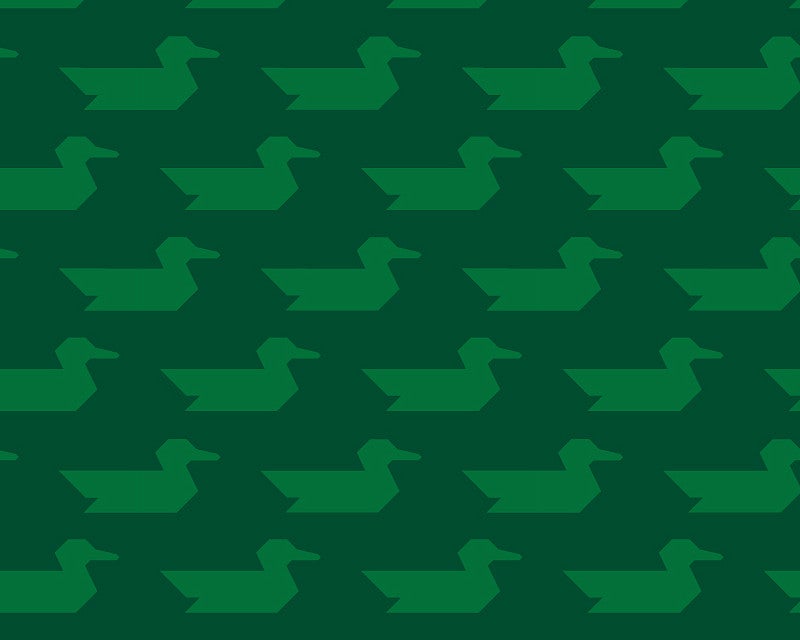
- The Swimming Ducks represent connection and shared movement forward.
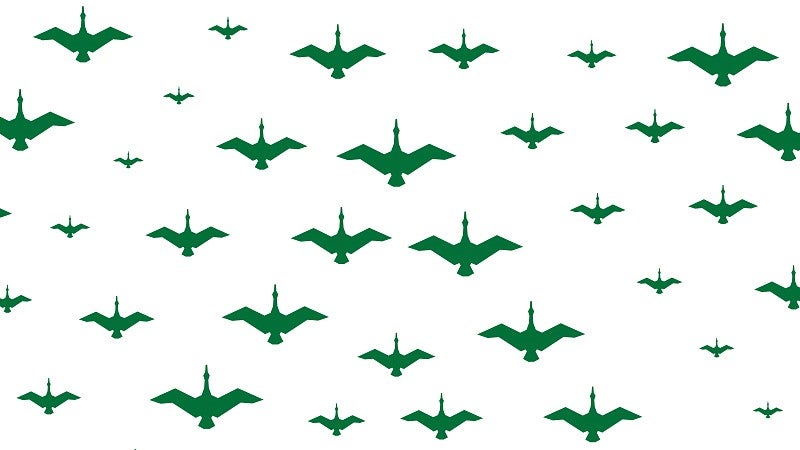
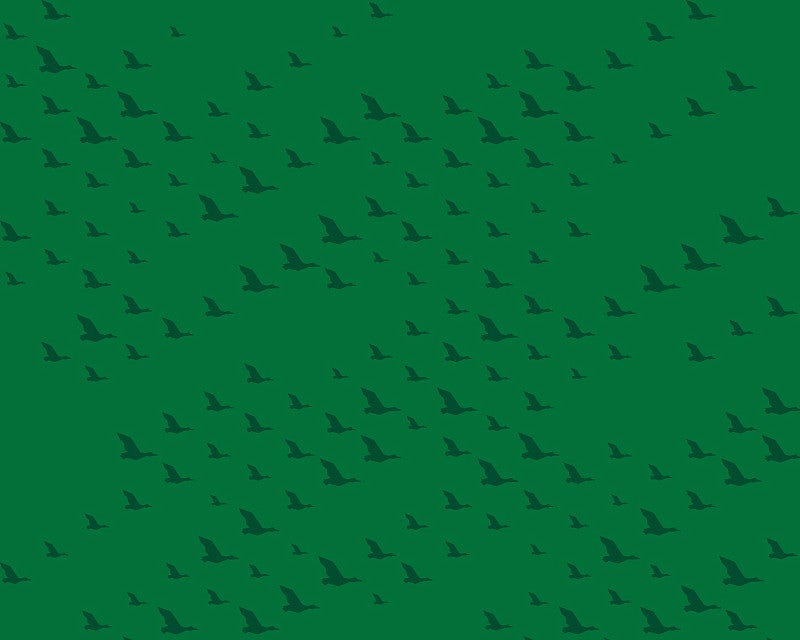
- The Soaring Ducks represent discovery together, attained at new heights.
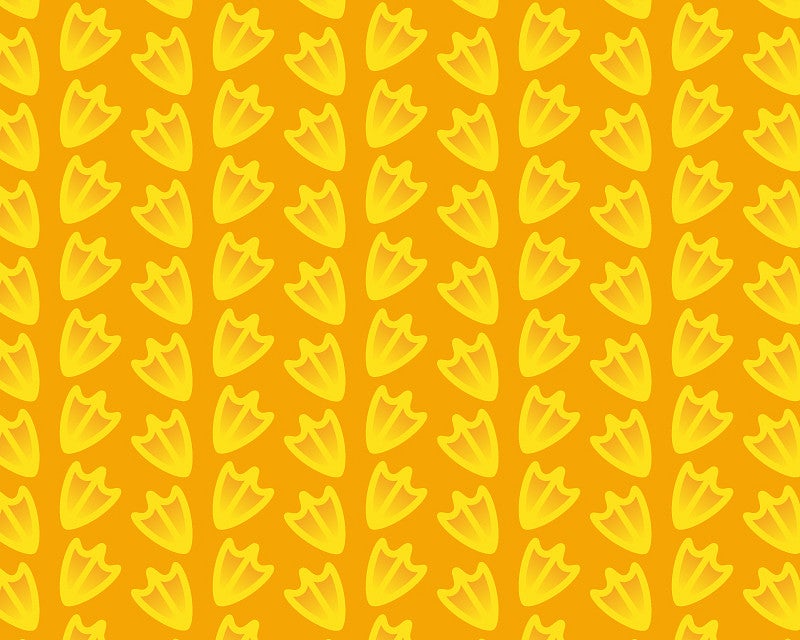
- The Webfoot is a repeating pattern of form and movement—echoing ducks in step and the collective rhythm of our community.
- The Waffle reflects a legacy of innovation and creative thinking.
- The Tree pattern, based on our state tree the Douglas Fir, grounds us in the place we call home.

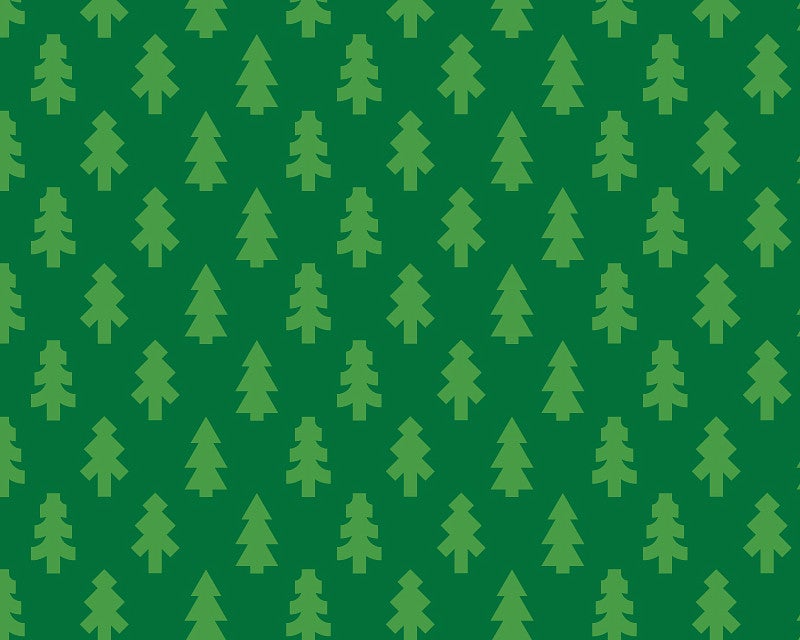
Keep the following in mind when using patterns:
- Note the use of gradient in the Webfoot and Waffle Sole pattern. For these two patterns, primarily use the gradient options to emphasize the step of a foot in motion.
- Patterns and their color options are available in the Expanded Brand Library.
- Do not create your own patterns.
Treeline
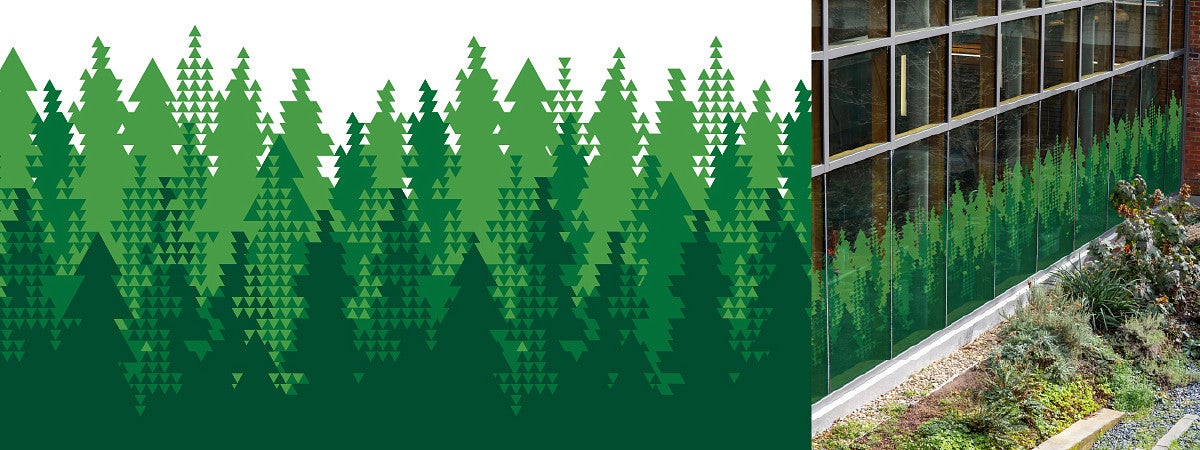
Inspired by Oregon’s forests, the Treeline connects our brand to our state's landscape. It reflects the dynamic relationship between Oregon’s natural environment and the research and technology that help us understand and shape its future. Unlike our patterns, the Treeline is a single, non-repeating element.
Keep the following in mind when applying the Treeline:
- It works best anchored along the bottom of compositions, reinforcing a sense of grounding and growth.
- Cropping into the Treeline creates striking visual moments and a sense of movement.
- Do not change the colors of the trees.
Icons
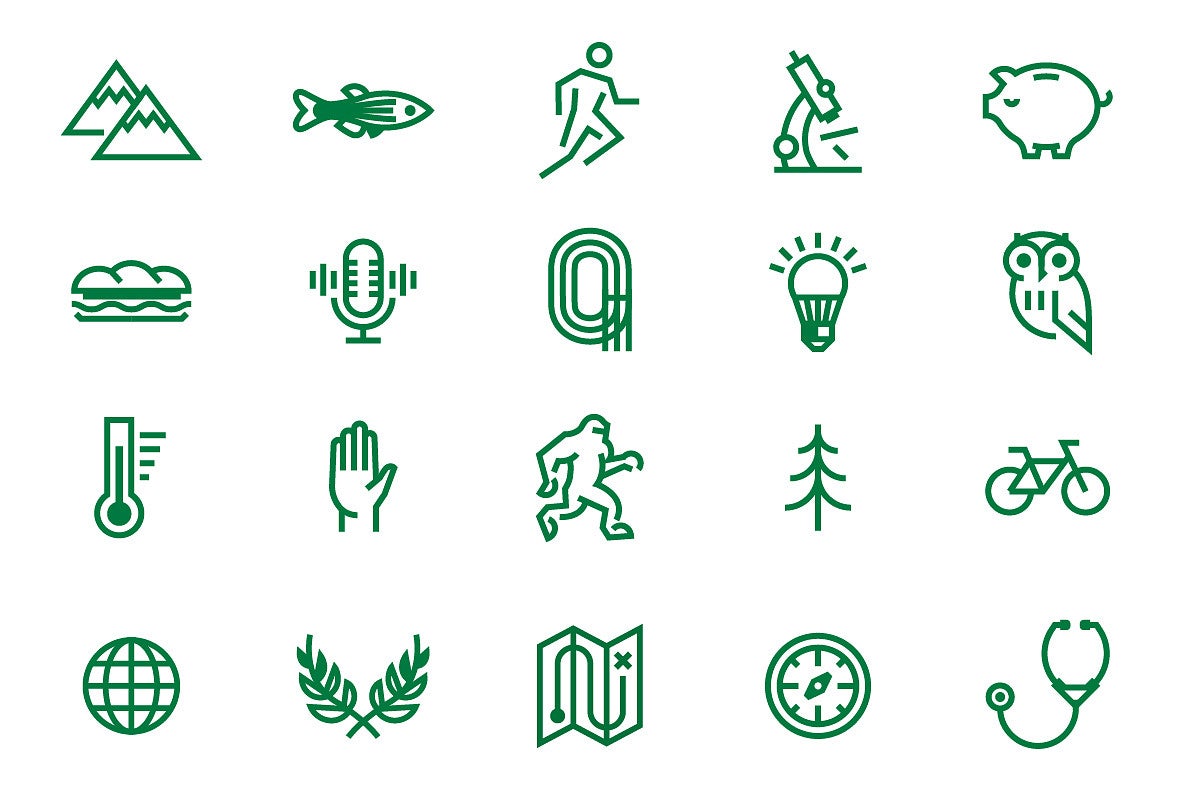
Our icons are bold, using thick lines and areas of fill. Primarily use icons at a small size to emphasize and support content. When using multiple icons next to one another, ensure they are all the same size for consistency in weight; our icons have been optimized to work well alongside each other for easy placement. Icons may be used in large decorative ways, as shown in the examples below. Use one icon at a time when applying them at large sizes. Do not combine icons to create a complex illustration. To create an illustration, reference our illustration guidance, further below on this page.
Contact uobrand@uoregon.edu for custom icons.
Note: Icons are meant to support content. They should never be combined with college, department, or program names to form a logo.
Shape Elements
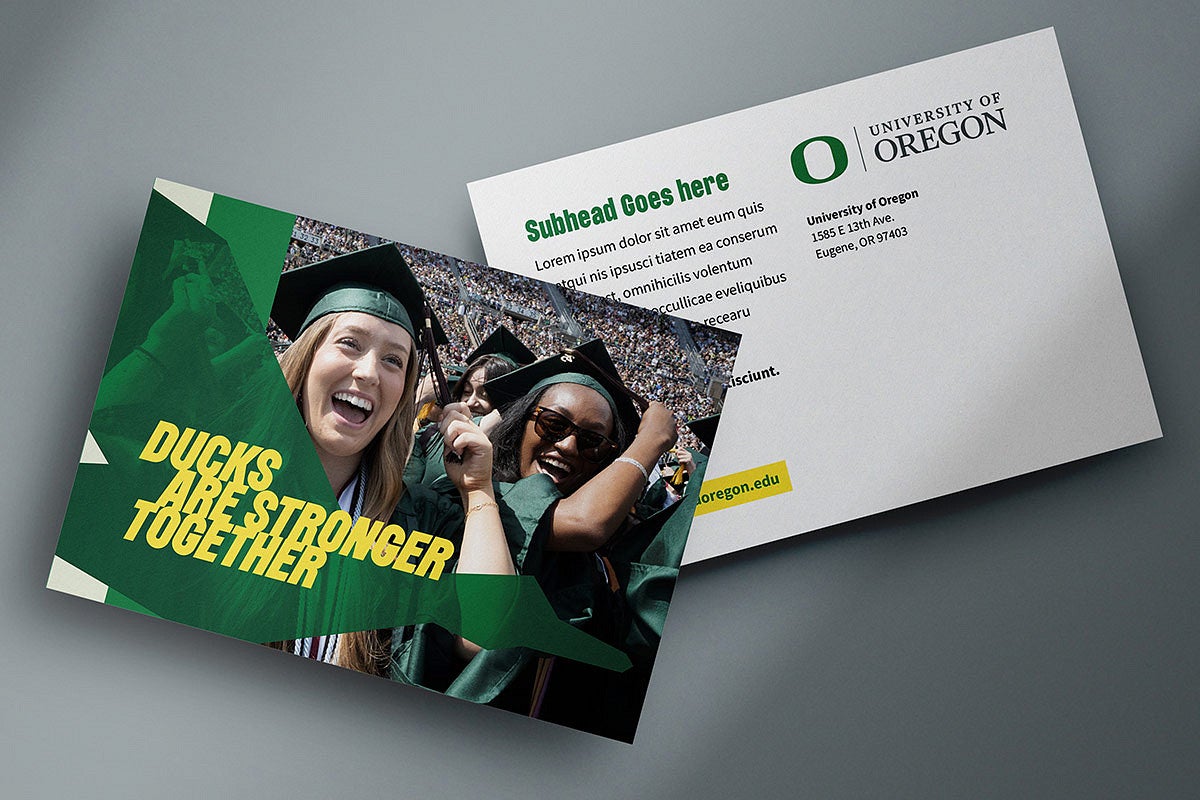
In addition to our iconography, our set of shape elements are used as decorative background elements or for cropping photography. Shape elements have been customized for use at a large scale. Shape elements are available in the Expanded Brand Library and can be used in any of our brand colors.
Keep the following in mind when using shape elements:
- For higher visual impact, use only one shape element at a time.
- Do not combine shape elements to create a new shape element.
- Do not alter shape elements by applying a stroke.
- Do not use shape elements—particularly the swimming duck and soaring duck—as small standalone icons.
Note: Shape elements are for decorative placement only, and licensing restrictions for the swimming duck and soaring duck shape elements apply when used on merchandise or swag items. Use the duck patterns when considering a duck image for merchandise.
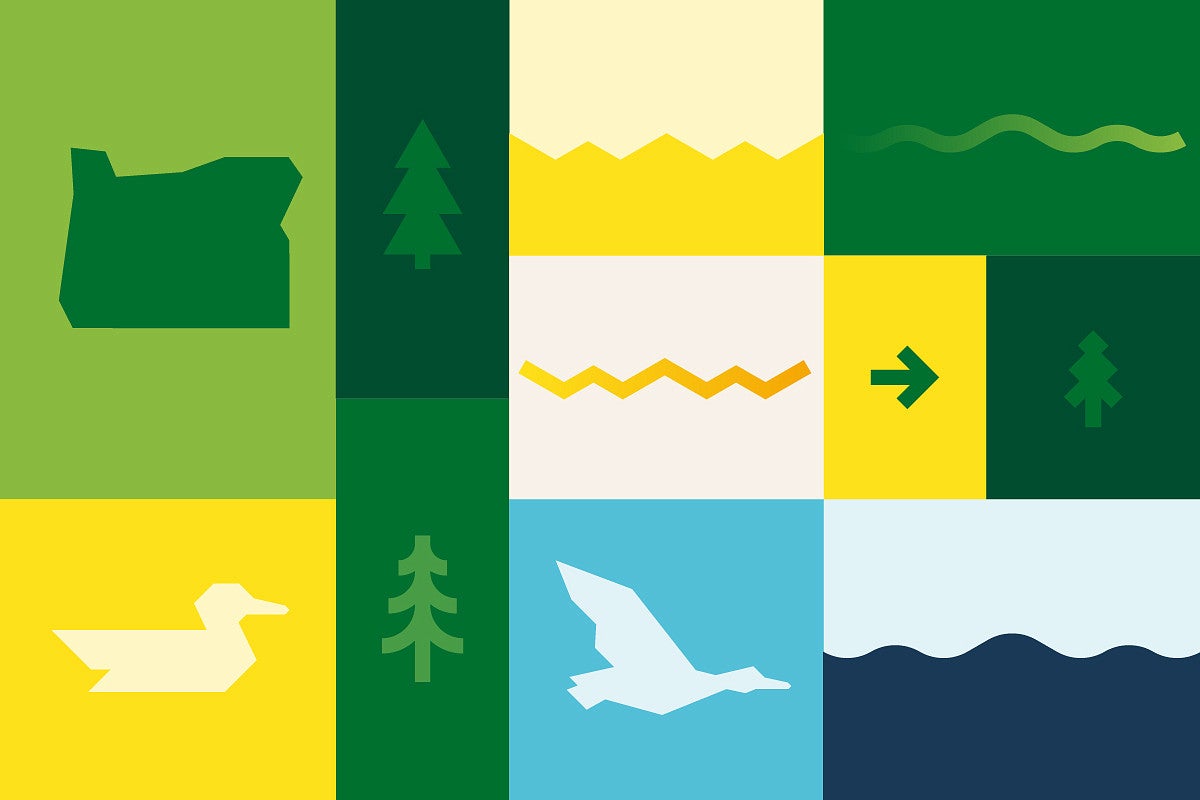
Examples of Shape Elements in Artwork

Illustrations
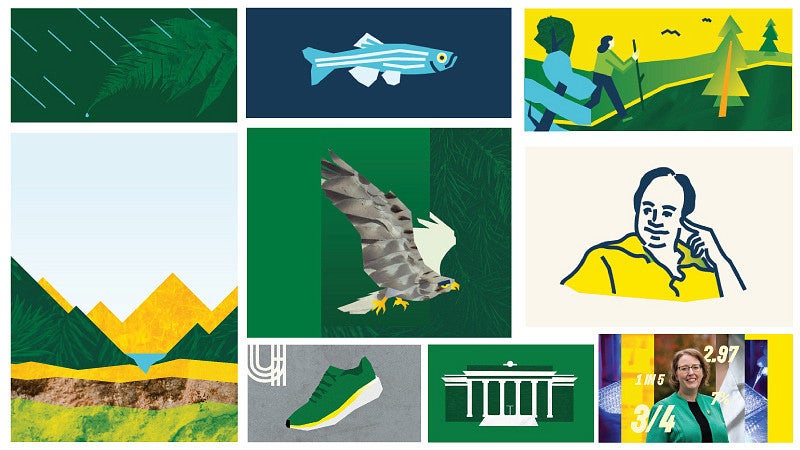
Our illustration guidelines are flexible, allowing for a variety of illustrative approaches that connect to the brand through the repeated use of core elements.
Keep the following in mind when creating illustrations:
- Illustrations use gradients, bold colors, and thick lines. Balance these elements with modern photography and bold typography.
- Use our primary and secondary color palette.
- Bring in moments of angularity in both line and shape, balanced by curves.
- Use flat end caps and thick weights for line elements.
- Incorporate duotone, gradient, or photography for added texture and depth.
- Illustrations can range from fully vector-based, to heavily photo-based, depending on the content or style.
- Do not create illustrations of the Oregon Duck or elements of the Oregon Duck ( i.e., feet, eyes, duck bill, sailor hat, ascot, etc.).
- Do not create illustrations using other company intellectual property (i.e., Nike swoosh).
When using photography, avoid excessive photo editing to maintain the integrity of the original image. Use stock photography sparingly and primarily as a textural or supporting element. Refer to our photography guidance for how to choose appropriate stock imagery.
Athletics Flying V Duck Pattern
The Flying V duck pattern is reserved exclusively for use by UO Athletics and on retail merchandise. It will not be made available to campus partners. Campus partners can use the soaring or swimming duck patterns instead.